
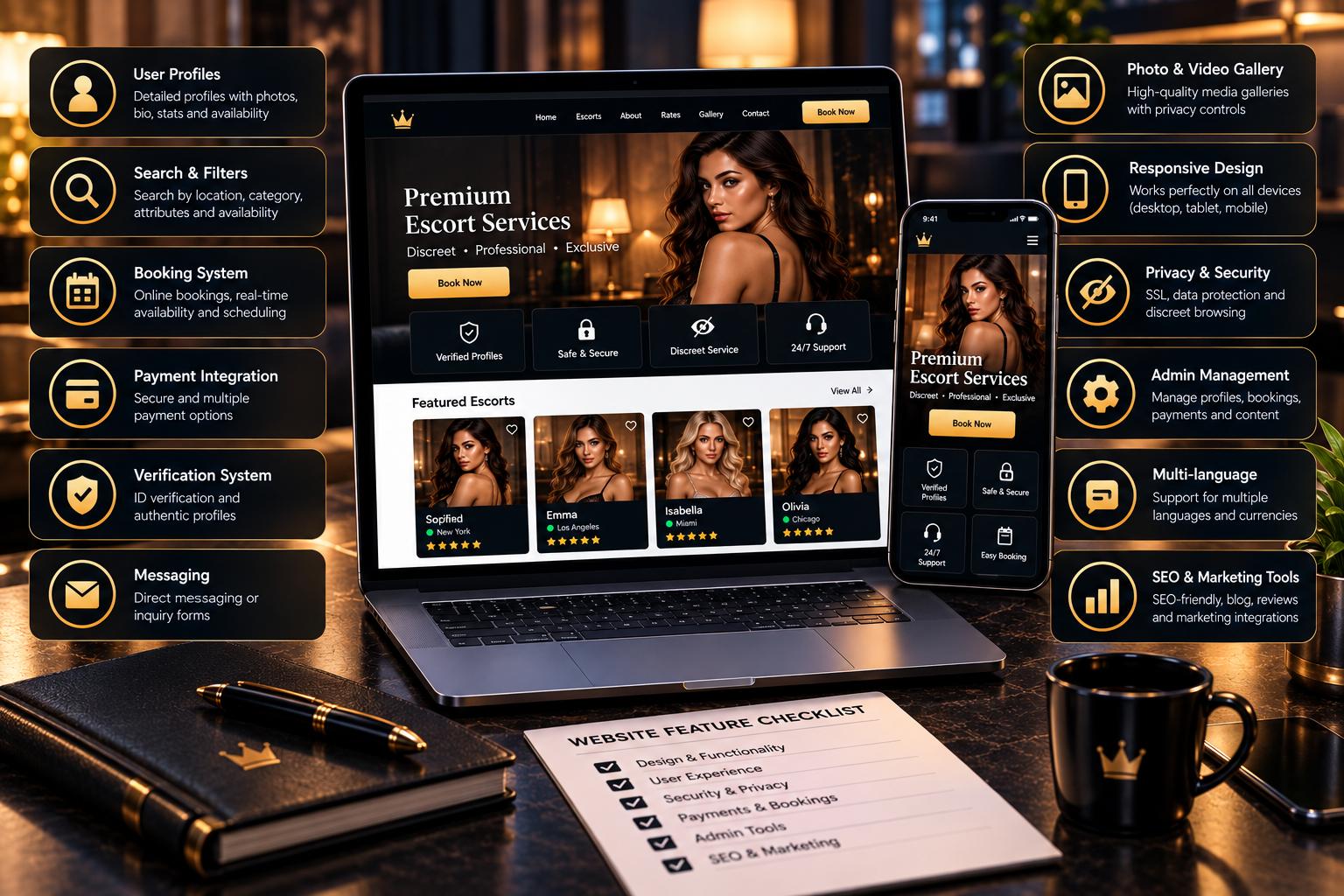
Directory sites are much more complicated than agency or independent sites. With independent sites or agency sites you might only have to manage 20-30 profiles. A directory site could have thousands. A solid architecture for a directory site is crucial because the site can grow exponentially. While it is still small, it can be changed and adapted easily. Large directory sites can be painful to work on because of the immense amount of data. Here are some things a good directory site needs.
A good directory site has good filtering
Good filtering for smaller sites can be hard to implement, but usually sites don’t have to worry about implementing good filtering until the site has 200-300 listings. When site starts having this many listings, filtering becomes extremely hard to do. The site should be designed to scale and have filtering that can be expanded upon.
A good directory site contains unique content for every region
Like agency sites, a good directory site can suffer from duplicate content. To combat this, each region should have unique content. Directory sites often implement filters on page to show results for a given region, but this leads to a loss of unique content, which in turn leads to a loss of SEO opportunity. Our playbook on local SEO for escort agencies shows how to make each region page unique.
Working through the listing submission process
How will you scale your process of reviewing and approving listing submissions? It’s important to define this process before you launch so you don’t have to scramble to create a process because of a bad listing submission.
 Improving the directory search function
 Improving the directory search function
As your directory grows, basic filters will no longer suffice. Visitors will expect more relevant results and may enter search queries in an imperfect manner. Developing search functionality to account for relevance will be more challenging than basic directory filters, and it will be worthwhile to implement this search functionality once listing volume justifies the change. At that point, it is worth weighing a custom-built vs. template escort website.
Listing-level contact and reservation functions
You will need to provide a consistent directory framework for each listing to facilitate contact and booking functions, while allowing operators to define processes to align with their preferences (i.e. contact form vs. external website link). The same principles apply as setting up a secure, discreet booking form.
Supporting payment processing
If you charge listing fees and give preferences to sponsored listings, you will need to carefully integrate a payment processing function to process listing fees and sponsorships, in the same manner we describe in the article on payment processors for escort and adult businesses.
I’m building out a large, rapidly expanding site. What are some strategies to support this?
I’m looking for strategies to manage lists of items that are automatically generated and updated, and have developed a clear URL structure to prevent thin or near duplicate content. I’m also looking for ways to link items within my site to improve site navigation. A large site with a lack of strategic internal linking is functionally equal to a large site with thousands of orphaned pages. If you need a directory built to scale, see our escort website design services.
Direct Answers
Frequently Asked Questions
There’s no hard number, but once you’re managing several hundred listings with meaningful filtering needs, a purpose-built architecture usually outperforms a WordPress plugin-based approach, both in speed and in long-term maintainability.
That’s a business decision more than a technical one, but if you do, build the payment and featured-placement logic in from the start rather than retrofitting it, this is a common source of costly rework.
Use a manual or semi-automated review step before any listing goes live, and confirm that the advertiser controls the contact details they submit. Clearly mark verified listings and give visitors an easy way to report suspicious ones.
Keep only your most valuable filter combinations, such as key regions or categories, as indexable pages with unique content. Set canonical tags or noindex on the rest so search engines don’t crawl thousands of near-identical result pages.
Don’t just delete the page and leave a 404. Redirect it to the most relevant regional or category page, or show a clear notice with links to similar listings, so visitors and any links pointing to it still have somewhere useful to go.
Planning or scaling a directory site?
Tell us what you are working on and we will come back with a straight answer, no obligation.