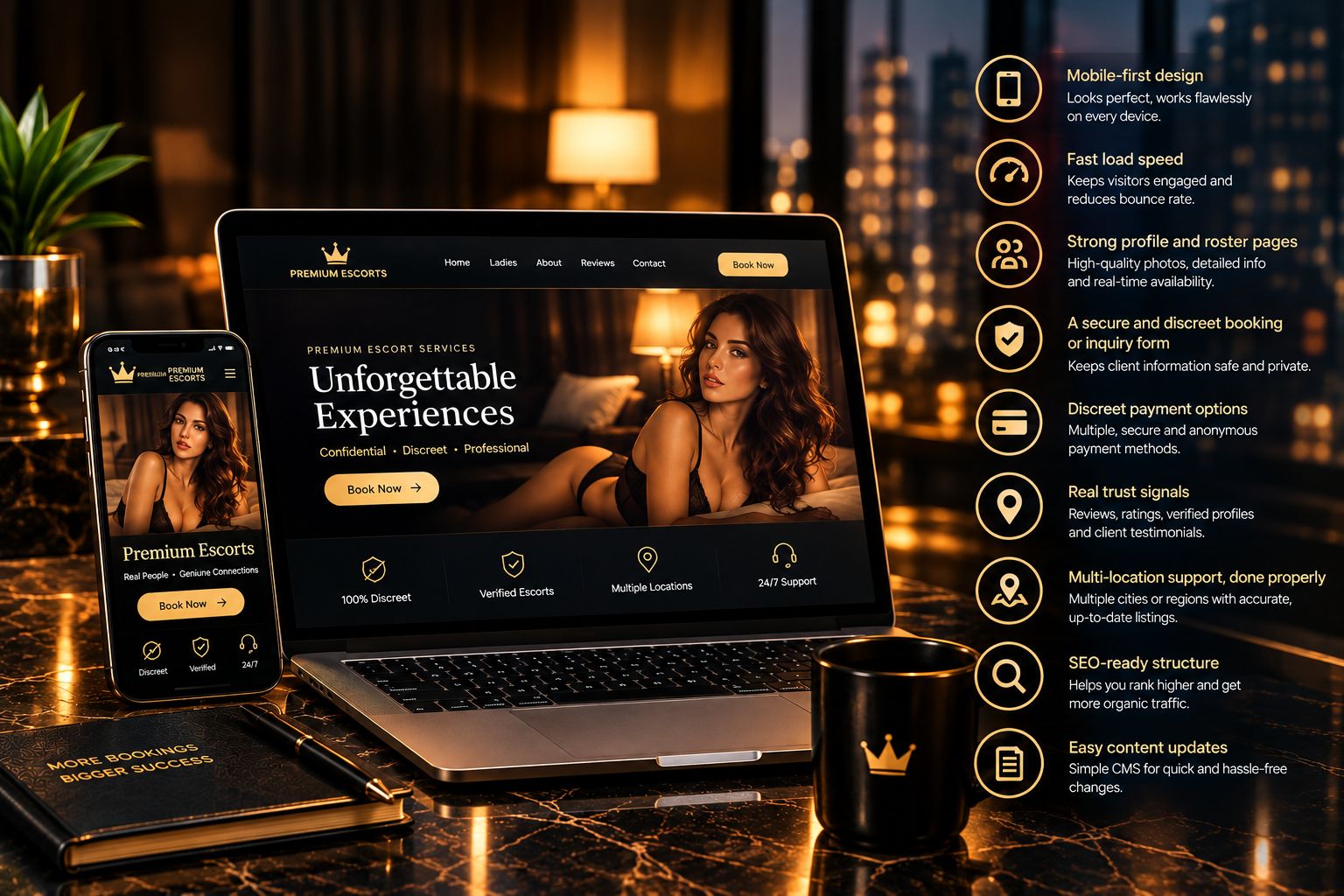
Just because a website has good aesthetics doesn’t mean it has good conversion. In fact, we see this often. Agencies approach us with websites that have good photography and design, but effective bookings are nonexistent, and there is no clear explanation as to why. Usually, the reason can be associated with a few of the nine features listed below that are missing or not optimized to their full potential.
Mobile-first design
Most traffic to an agency website is usually from mobile phones. This means that the mobile website version is the main version of the site, and the desktop version should come second. Agencies should avoid optimizing their website versions for desktop browsers, and subsequently mobile browsers. Conduct tests by mocking an average signal on an actual phone as opposed to using a desktop browser and shrinking the window size to test the mobile version.
Fast load speed
Conversions are lost with every extra second of load time, and this niche is worse than most for slow sites because visitors typically are browsing somewhere that they do not want to be. Load time typically increases due to but are not limited to, large, unoptimized profile photos. Aim for a load time under 2-3 seconds.
 Strong profile and roster pages
 Strong profile and roster pages
Each profile should have its own page and not just a listing in a grid that calls for infinite scroll. Profile pages are indexable by search engines and easier to remember than listing cards.
A secure and discreet booking or inquiry form
Collect as little information as possible to initiate a booking. A form that asks a million questions on the first contact is a form that loses people. We explain how to do this properly in How to Set Up a Secure, Discreet Booking Form.
Discreet payment options explained clearly
Before visitors provide information, they want to ensure that payment is processed in the background and with a payment processor that is used for this kind of business and is reliable. State this clearly as opposed to leaving it for the visitor to figure out.
 Real trust signals
 Real trust signals
Testimonials, verified badges, years-in-business: whatever’s genuine and available. Stat badges alone read as marketing copy unless they’re backed by something checkable, like actual portfolio links or real client examples.
Multi-location support, done properly
Each city that the agency operates in deserves its own web page with local content. This page should not be a shared content paragraph in the agency web site footer. For more information about how to set up these web pages read Multi-Location Escort Agency Web Sites.
SEO-ready structure
URLs should be clean and unbroken with clear navigation and no broken or unreferenced links. This isn’t something users necessarily notice, but this structure will differentiate your site from one that is not findable.
Easy content updates
The person in charge of the agency should be able to create a new profile, change pricing, and upload an image without having to hire a programmer. Sites that are not maintained become outdated quickly and an outdated site is one of the more silent ways to lose trust in this industry.
How to audit your current site?
Read this list on your page honestly like a first time visitor would rather than like you who has been on the page a million times and has learned to ignore things. Most of the sites we audit are missing 2 to 3 of these, rarely all 9, but rarely none of them. Fixing even one of two of them usually has more of an impact than a full redesign.
Direct Answers
Frequently Asked Questions
For a small independent site, a contact form usually works as a starting point. However, an agency that has a lot of different profiles usually outgrows a contact form quickly and a real booking or inquiry system with a more defined structure usually works best in these cases.
Curious how your current site stacks up against this list?
Tell us what you are working on and we will come back with a straight answer, no obligation.